Restoring Rangelands Nile Basin Initiative is working to restore the ecological, social, and economic vitality of one of the planet’s most critical landscapes: the Nile River region.
INITIATIVE
Using regenerative land management, inclusive governance, and strategic market systems to address the severe, complex and interconnected challenges faced in the Nile Basin, the Initiative aims to transform the region into a thriving landscape providing vital climate adaptation, food and water security, peacebuilding and social resilience.
Led by Hub del Norte, in collaboration with a consortium of local, regional and international partners working across the region, together we envision the Basin as a connected landscape where regenerated land, water, biodiversity, and livelihoods form the foundation for resilience, prosperity, and peace.
In this landscape, healthy rangelands, thriving rural economies, stable markets and capable institutions grow together and build inclusive economic and social outcomes. Decisions on land, water, and production are informed by ecological science, locally grounded knowledge, and legitimate, accountable institutions. Ecosystem functions are restored, communities gain agency and economic resilience, and governance systems demonstrate the credibility and capacity to sustain ecological recovery, prosperity, and resilience across the Nile Basin Region for generations.
Blended climate finance ensures long-term resource availability for the decades to come, anchoring the overall systems change.
A living corridor of climate adaptation, stability and resilience
The Restoring Rangelands Nile Basin Initiative will directly restore 6.8 million hectares and influence improved management across a further 1.36–2.72 million hectares across Egypt, Sudan, South Sudan and Uganda through institutional adoption, policy integration, replication and strengthened market incentives. Together, these pathways represent a total potential landscape influence of 8.16–9.52 million hectares across the Nile Basin Region. We estimate this will impact between 970,000 and 1.37 million pastoralists, alongside approximately 400 commercial agricultural producers and grazing enterprises, all of whom will benefit from healthier ecosystems, stronger markets and more resilient livelihoods. Integration with private-sector actors across meat, dairy, livestock and agricultural value chains will accelerate value-chain upgrading, improve market access and anchor long-term incentives for regenerative land management across the Nile Basin corridor.
This Initiative builds the foundations for a decades-long landscape scale transformation enabled by long-term climate finance. This will enable the rangelands of the Nile Basin to become a living corridor of climate adaptation, stability and resilience; where regenerative grazing, syntropic agriculture, healthy soils, and restored biodiversity anchor food and water security.
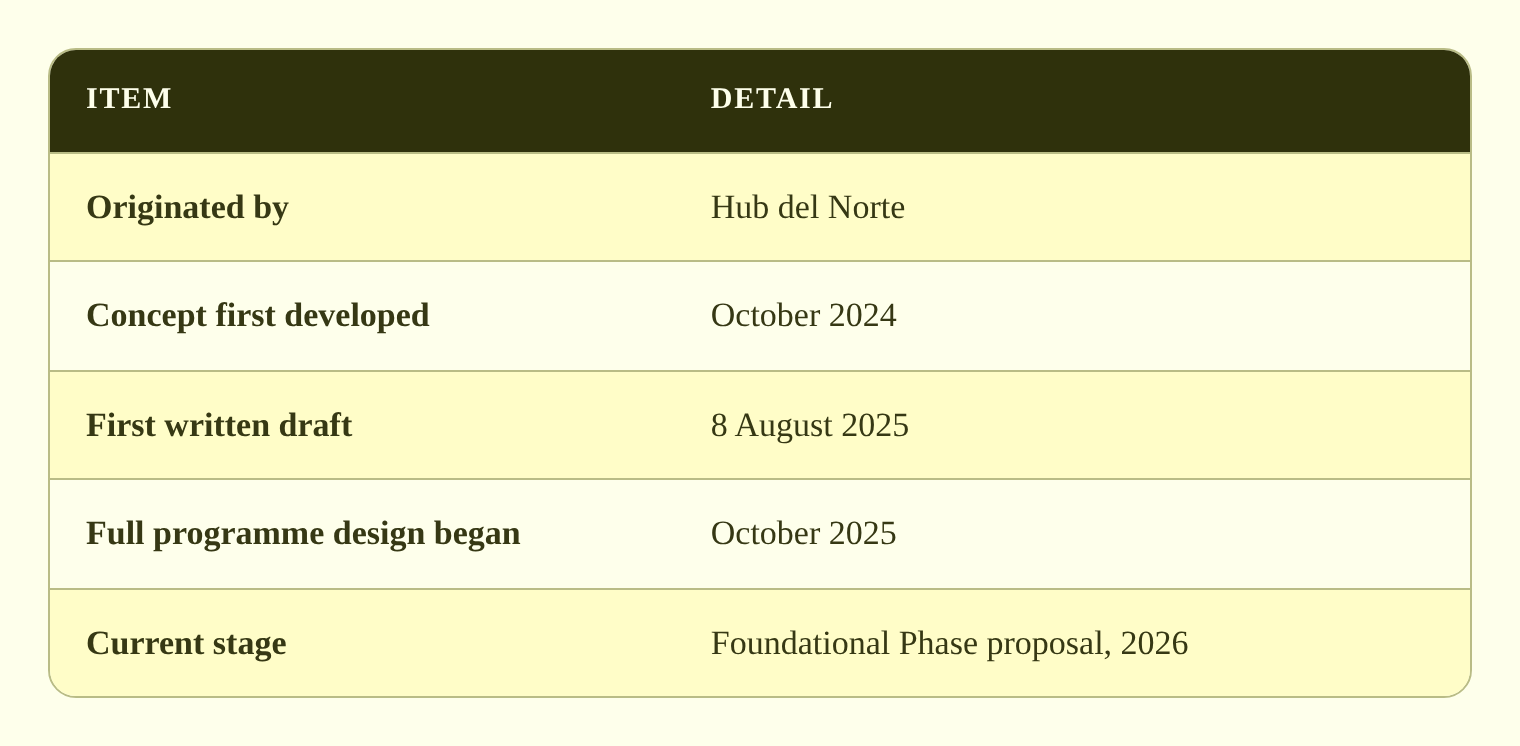
Origin of the Initiative
The dated history of this Initiative and its documents is kept in the Record.
Approach
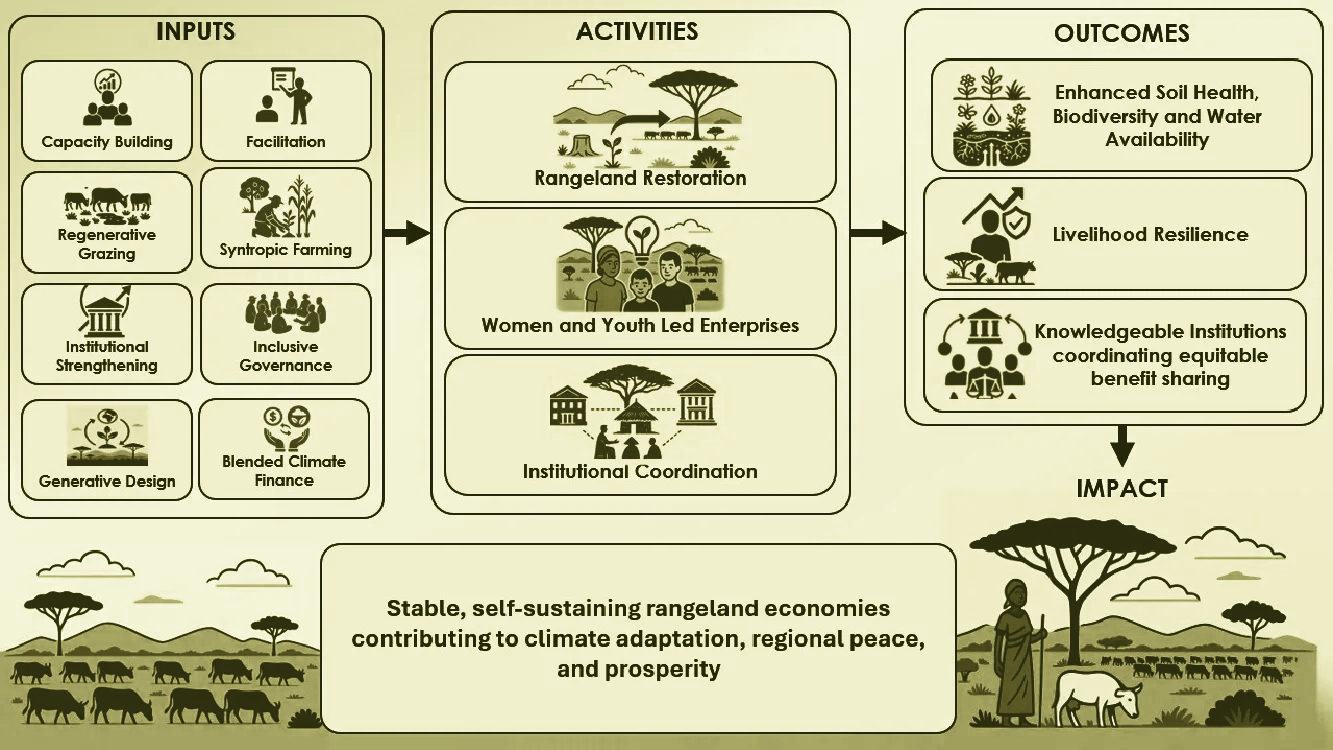
The Initiative takes a systems-based approach, directly addressing the interlinked crises affecting the Nile Basin Region by positioning regeneration as a foundation for regional peace, prosperity, and climate adaptation.
The size and complexity of the challenges mean that the Initiative requires significant investment for implementation across the four countries. In total, we estimate the Initiative will require an investment of USD 300M over a five-year period. We envision the work over the following decades to be undertaken through blended climate finance in order to no longer rely upon donor funding but instead put the ecosystem on the balance sheet as it should have always been.
Therefore, work packages within the programmes are designed to be funded separately yet are relational and integrated, building upon and with each other while allowing for funding flexibility based on the priorities of donors, all implemented as projects by the Consortia, but managed centrally by Hub del Norte to ensure coordinated knowledge sharing and iterative impact across the Initiative.
Please get in touch if you are interested in finding out more about the Initiative, its programmes of work, or would like to help design a fundable pathway to restoring the Nile Basin's rangelands.
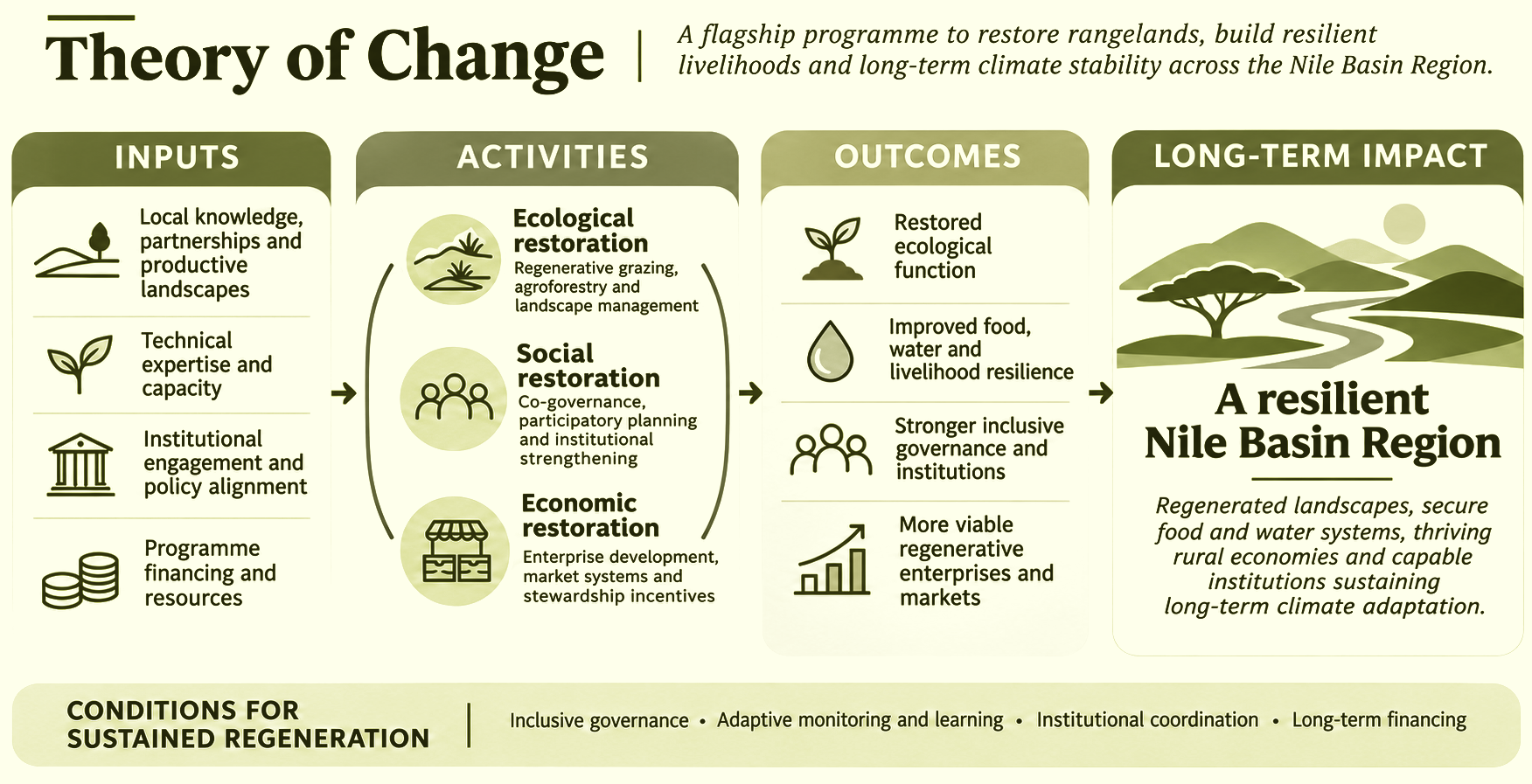
Theory of change
The Restoring Rangelands Nile Basin Initiative designs ecological, governance and market structures which address the underlying conditions that have historically weakened rangelands and rural livelihoods. Shaping the wider system rather than focusing on individual outputs, creates the enabling conditions in which communities, ecosystems and institutions can function in stable, mutually reinforcing ways.
This approach is built on the understanding that ecological regeneration can drive social, economic and institutional resilience. When rangelands recover through holistic planned grazing, syntropic agroforestry, improved water cycling and biodiversity renewal, they can regain productivity and ecological stability. When this ecological foundation is connected to market systems that reward stewardship - such as regenerative livestock value chains and payments for ecosystem services - communities, businesses and institutions can create a self-reinforcing cycle of regeneration, inclusion and opportunity.
Our Theory of Change describes the causal pathway through which investments, activities and enabling conditions are expected to generate both outcomes and long-term impacts.
Technical approach
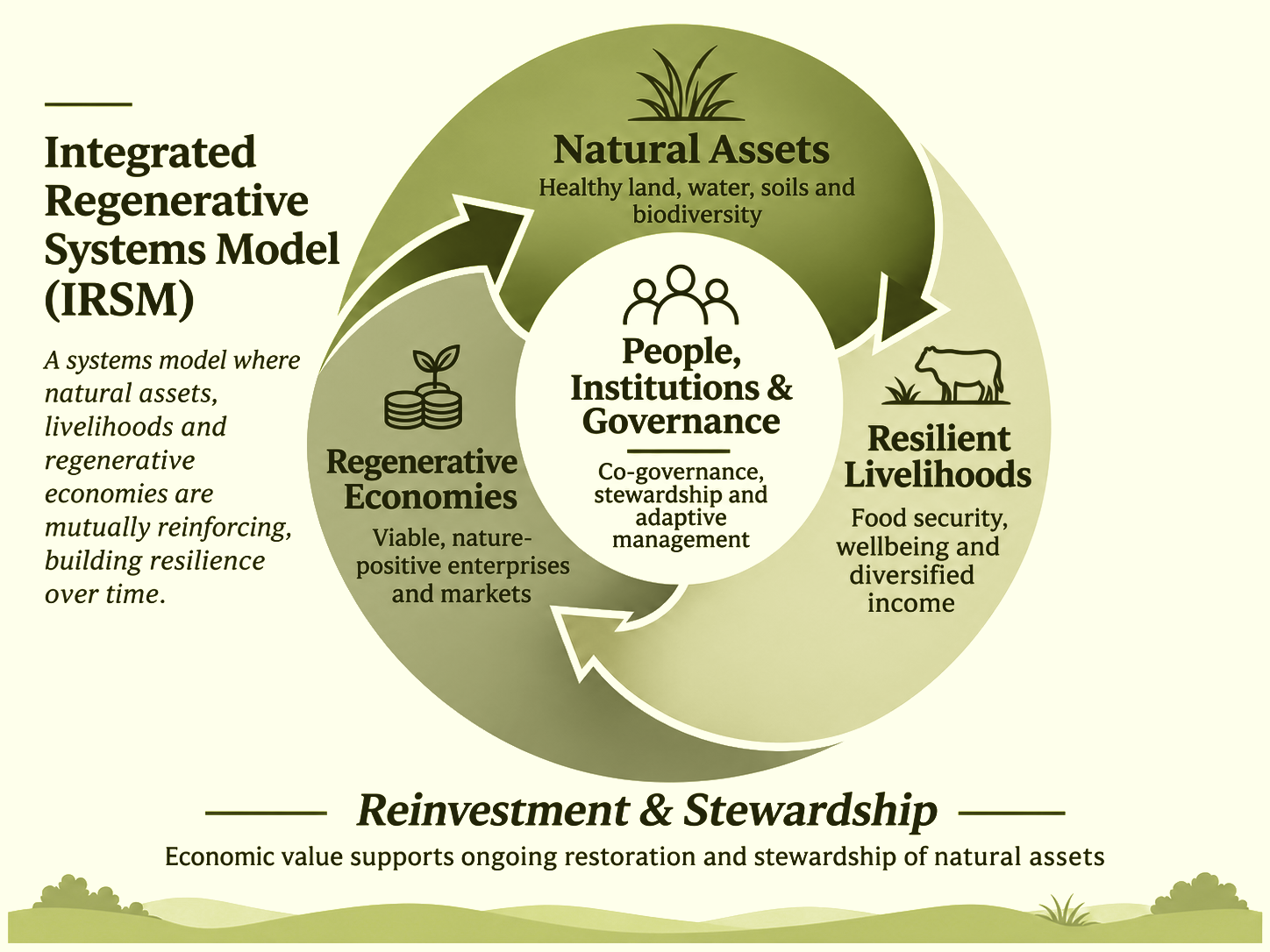
The technical approach for the Initiative is grounded in the Savoury Institute’s Holistic Management framework [LINK] and arid region syntropic agroforestry and organizes its wider programme logic through the Integrated Regenerative Systems Model (IRSM).
The IRSM was developed by Hub del Norte specifically for the Initiative, to integrate the ecological, livelihood, economic and institutional dimensions of regeneration within one adaptive systems model.
It includes four domains that must regenerate together, interconnected by learning, monitoring and adaptive management.
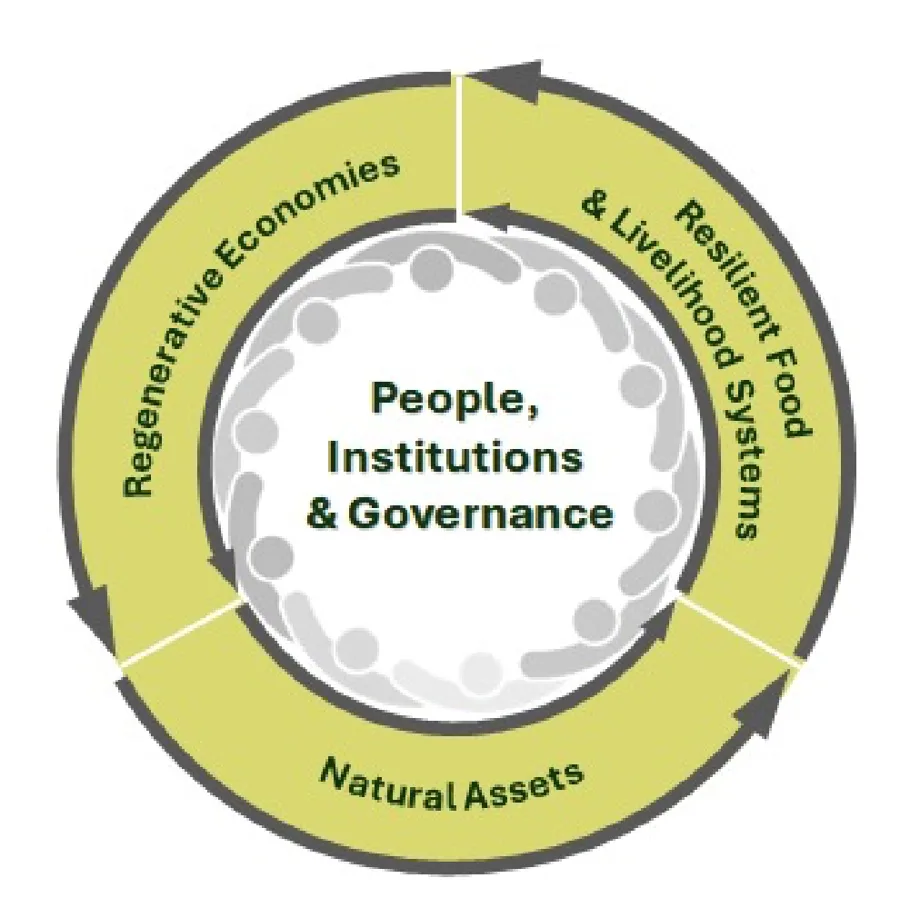
Integrated Regenerative Systems Model (IRSM) © Hub del Norte
Programmes of work
Natural Assets
Healthy soils, vegetation, biodiversity, water cycles and functioning rangelands.
Resilient Food & Livelihood Systems
Secure, diverse livelihoods, food and water security, pastoral mobility and wellbeing.
Regenerative Economies
Markets, enterprises and financial mechanisms that reward stewardship and keep value circulating locally.
Enabling Institutions
Legitimate, knowledgeable and accountable institutions coordinating land, policy and finance.
The Initiative translates the four interdependent domains of the Integrated Regenerative Systems Model into an operational design structured around three interconnected implementation components: Ecological Restoration, Social Restoration and Economic Restoration. These components represent separate, but interconnected, programmes of work, and provide the practical pathways through which the Initiative will regenerate natural assets, strengthen food and livelihood systems, build regenerative economies and reinforce enabling institutions.
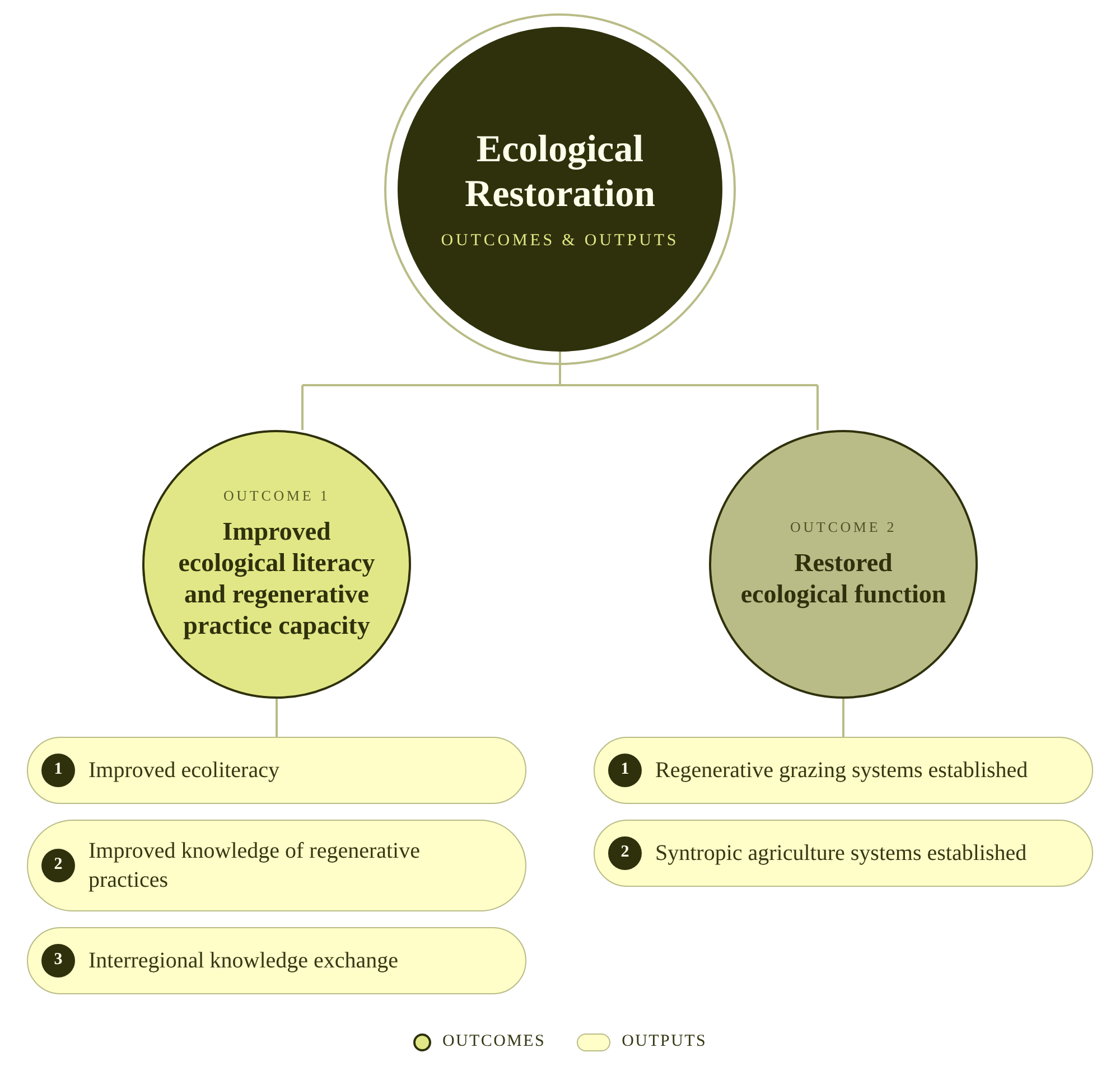
Ecological Restoration rebuilds natural assets, decreasing the level of regional disasters while boosting agronomic productivity.
Ecological restoration begins with knowledge. Communities, producers, land managers, trainers and institutions build a shared understanding of how soil, water, vegetation and grazing systems interact, and how to translate that knowledge into locally appropriate action. Through peer-led and experiential learning, demonstration sites and adaptive planning, they work together to develop regenerative grazing, syntropic agroforestry and land-use strategies that support the recovery of ecosystem function.
As soil health, water cycles and biodiversity recover, rangelands regain ecological function, productive capacity and greater resilience to climate variability. Well-planned livestock management, integrated with context-appropriate syntropic agriculture and other regenerative agriculture techniques for both pastoralists and commercial farming, actively drives the recovery of biodiversity, soil structure and vegetation dynamics. Together, these practices transform degraded landscapes into more resilient and productive ecosystems, restoring confidence in the land.
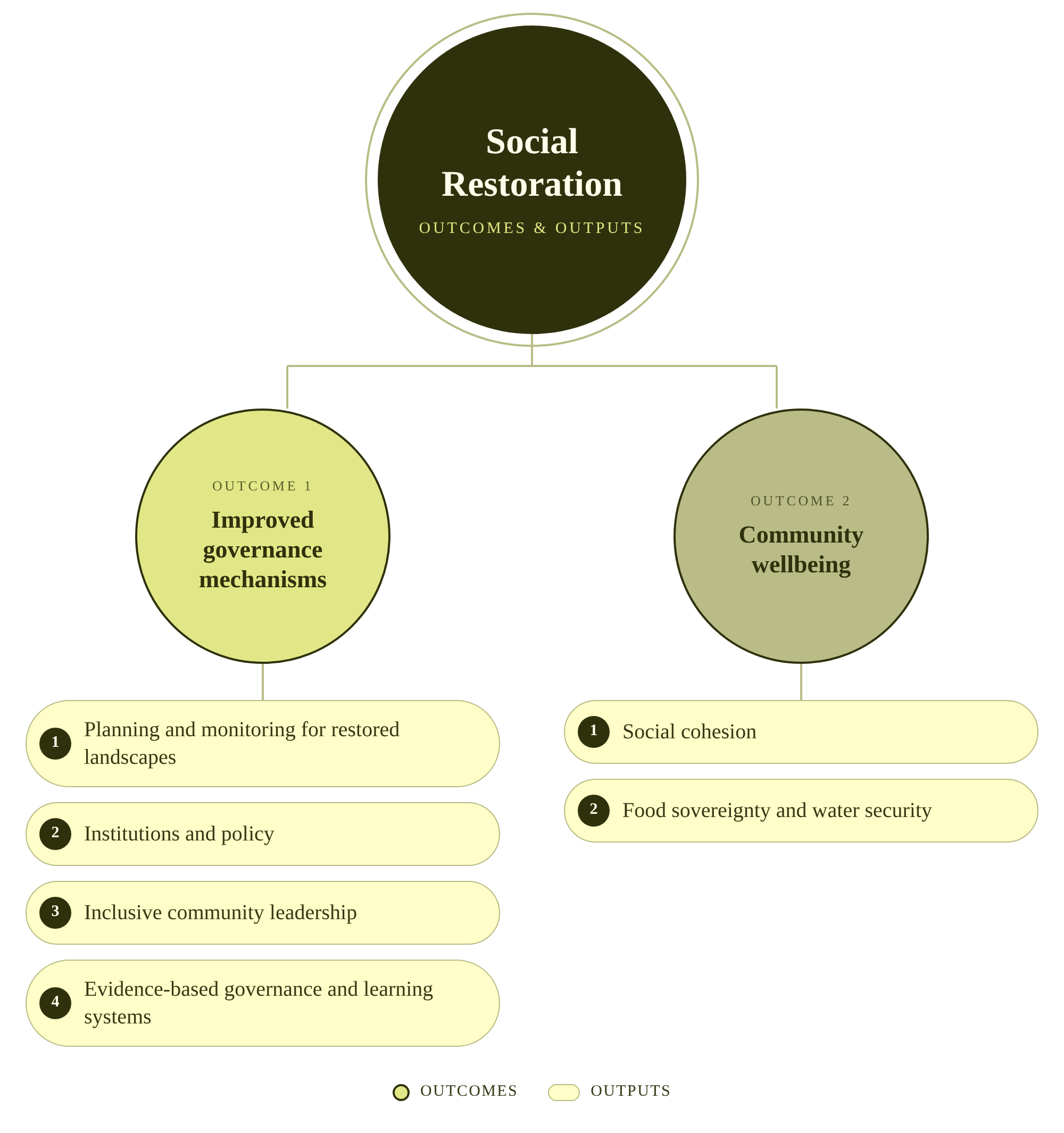
Social Restoration strengthens resilient food and livelihood systems, community wellbeing and the institutions and relationships through which land, water and shared resources are governed.
Regenerating land also requires regenerating the relationships and institutions that hold communities together. This component rebuilds cooperation, equity and trust by enabling communities, commercial land users and institutions to co-lead the stewardship of water, rangelands and shared resources. As landscapes recover, co-governance, joint resource management and participatory decision-making reduce conflict risks, ease pressure on scarce resources and restore social cohesion.
Through co-built processes such as transparent planning, accountable institutions and shared rules, through enhanced agency communities, commercial farms and other land-based businesses take shared responsibility for managing rangelands, water and connected landscapes, while contributing to local development priorities. Particular focus will be on empowering women and youth in governance, resource management and decision making. Improved access to nutritious food and reliable water enhances wellbeing, while diverse community members and landowners participate as co-designers of local plans, rules and adaptation strategies.
By grounding institutions in ecological literacy and strengthening their legitimacy, this component ensures that healthier ecosystems are matched by peaceful, adaptive societies capable of long-term stewardship.
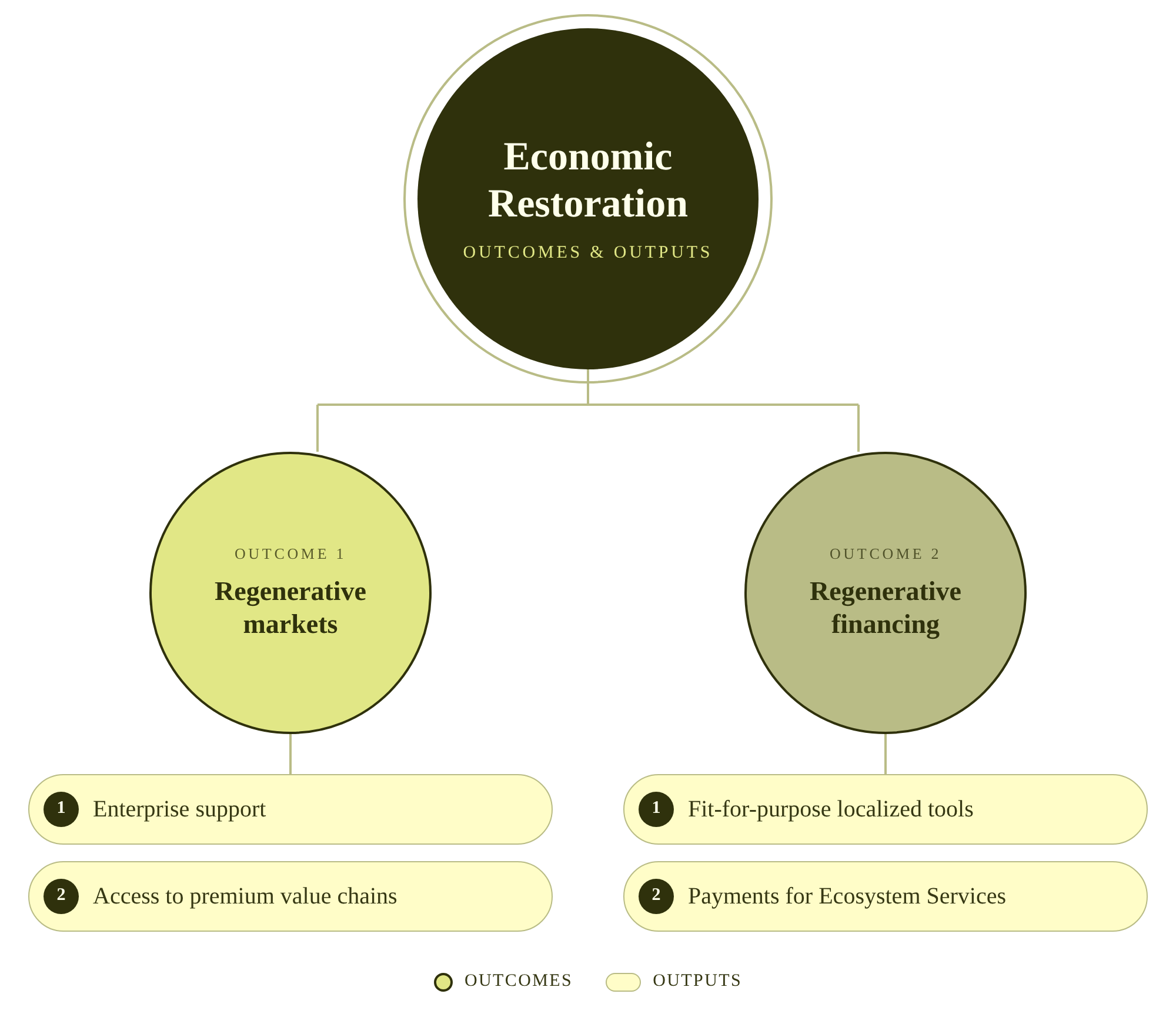
Economic Restoration develops markets, enterprises and financial mechanisms that reward stewardship, strengthen livelihood resilience and reduce the long-term economic costs of land degradation and climate shocks.
Regeneration is only complete when there is enduring economic resilience as a result. This component turns restored soils, healthier herds and recovering vegetation into inclusive, climate-resilient economies along the White Nile corridor. As rangelands recover from Uganda and South Sudan through Sudanto Egypt, production will stabilize, costs fall and new market opportunities emerge.
Healthy rangelands support stronger, more resilient herds and open pathways to fair, climate-smart livestock markets, while also creating space for diversified, locally rooted enterprises in processing and services. They also strengthen nature-based products, markets, cooperatives and savings groups so that value circulates locally, while fair links to regional and premium value chains ensure that producers are rewarded for stewardship rather than depletion.
At the national level, restored landscapes reduce the economic risks of climate shocks, lowering the public costs of drought and flood response, conflict, food imports and health burdens linked to malnutrition and degraded environments. Regeneration stabilizes rural economies, improves nutritional outcomes, and strengthens the fiscal resilience of states across the White Nile corridor.
By aligning regenerative production with inclusive finance, fair market rules and reduced climate risk, this component makes regeneration a viable economic strategy - anchoring household incomes, regional trade and national adaptation pathways in the health of the land.