
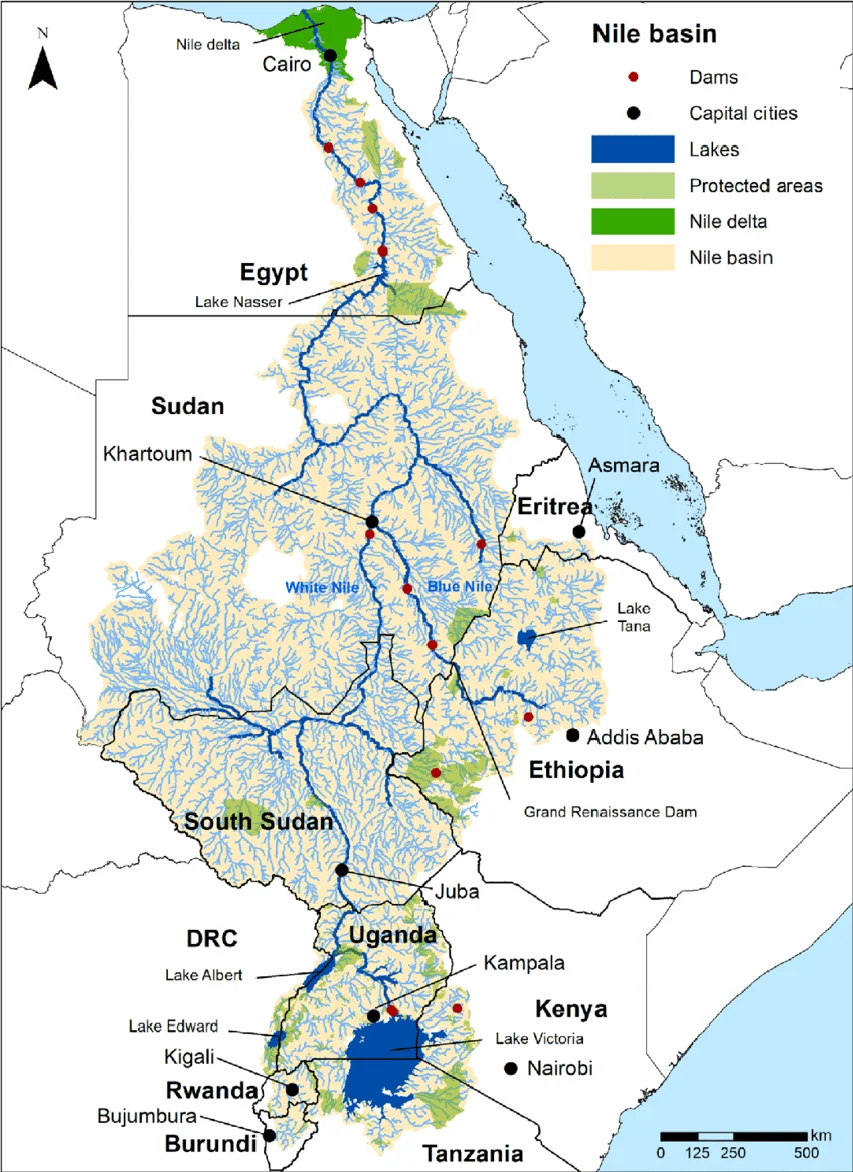
The rangelands and connected production landscapes of the Nile Basin Region form one of Africa’s most strategically important ecological systems. Extending from the White Nile headwaters and floodplain systems of Uganda and South Sudan, through Sudan and into the downstream Nile landscapes of Egypt, these territories form a connected hydrological, ecological and economic corridor.
Rather than static plots of farmland, these landscapes are highly dynamic, composed of native grasslands, savannas, shrublands, and seasonal floodplains interwoven with agrifood production. These landscapes, which are part of one of the five most critical river systems in the world, regulate water for more than 250 million people and anchor the Nile Basin. Their international importance lies in sustaining regional stability, biodiversity, and food security across multiple nations. Locally, the Nile sustains commercial producers as well as pastoral and agro-pastoral communities whose mobility and stewardship have long supported food security and peace (UNCCD, 2022; FAO, 2021).
These landscapes function as a single living system: when upstream rangelands degrade, downstream water security weakens while desertification in the north moves its way south, bringing conflict along with it.
Decades of overgrazing, conflict, weak governance, coping mechanisms, and unsustainable land use have stripped vegetation, destroyed biodiversity, broken water cycles, and accelerated land degradation. As a result, millions of pastoralists and agro-pastoralists, along with important commercial-scale agricultural supply chains, now face heightened climate vulnerability and declining food and water security, which are growing drivers of displacement. As the land fails, so do mobility systems, markets and local institutions, contributing directly to fragility and resource-related conflict along the Nile corridor.
The corridor's rangelands feed millions of heads of livestock. They support local food security, a large export trade in live animals to Gulf markets, and supply chains for sorghum, wheat, sugarcane, sesame, olive oil, fresh fruit, gum arabic, groundnuts and cotton.
Each country holds a different part of the same system, so restoration in one strengthens water and food security in the others.
One river, four nations, a shared future
Uganda
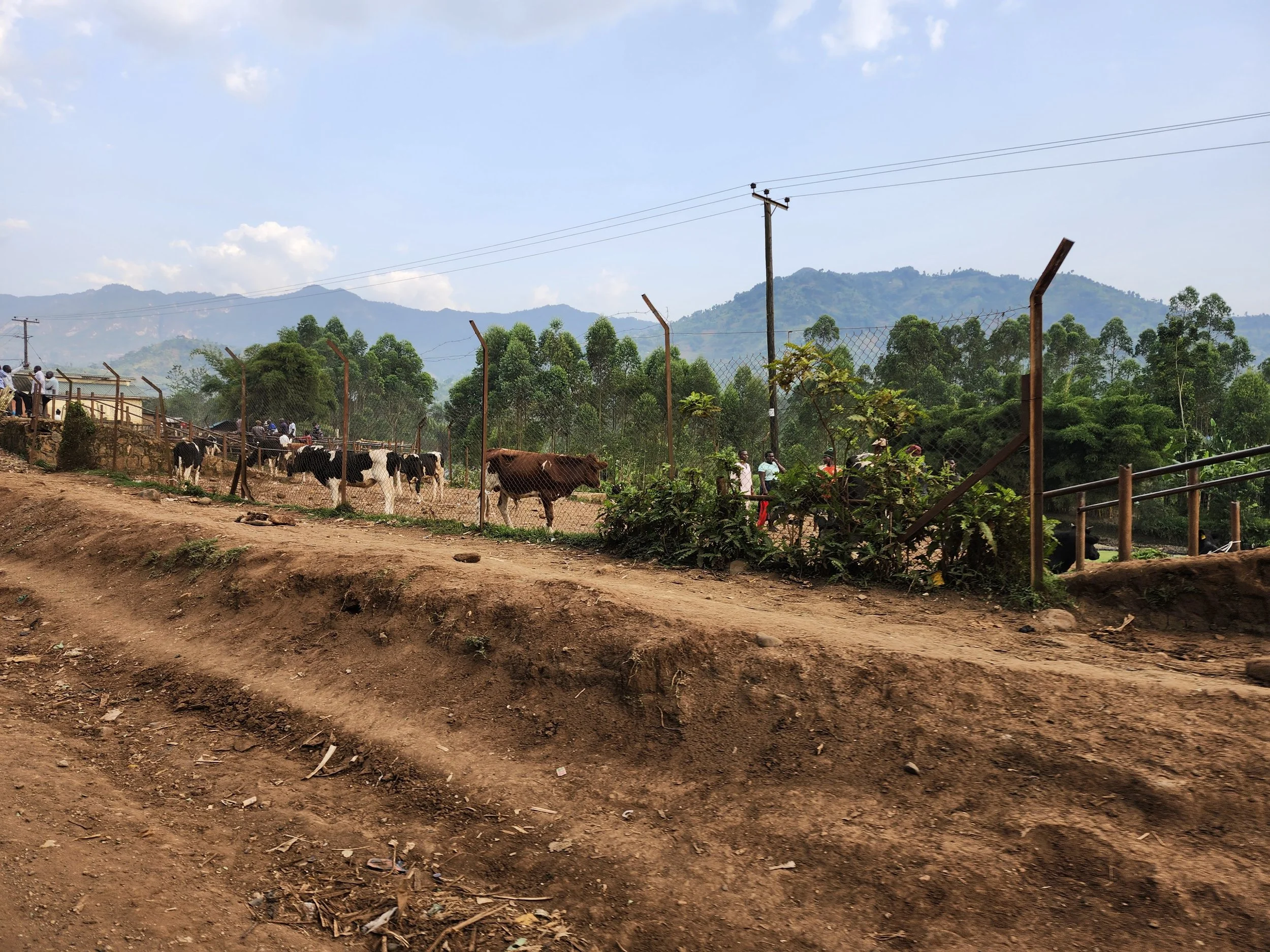
Headwaters
The White Nile leaves Lake Victoria here. Rainfall-dependent headwaters and rangelands set the flow for everything downstream.
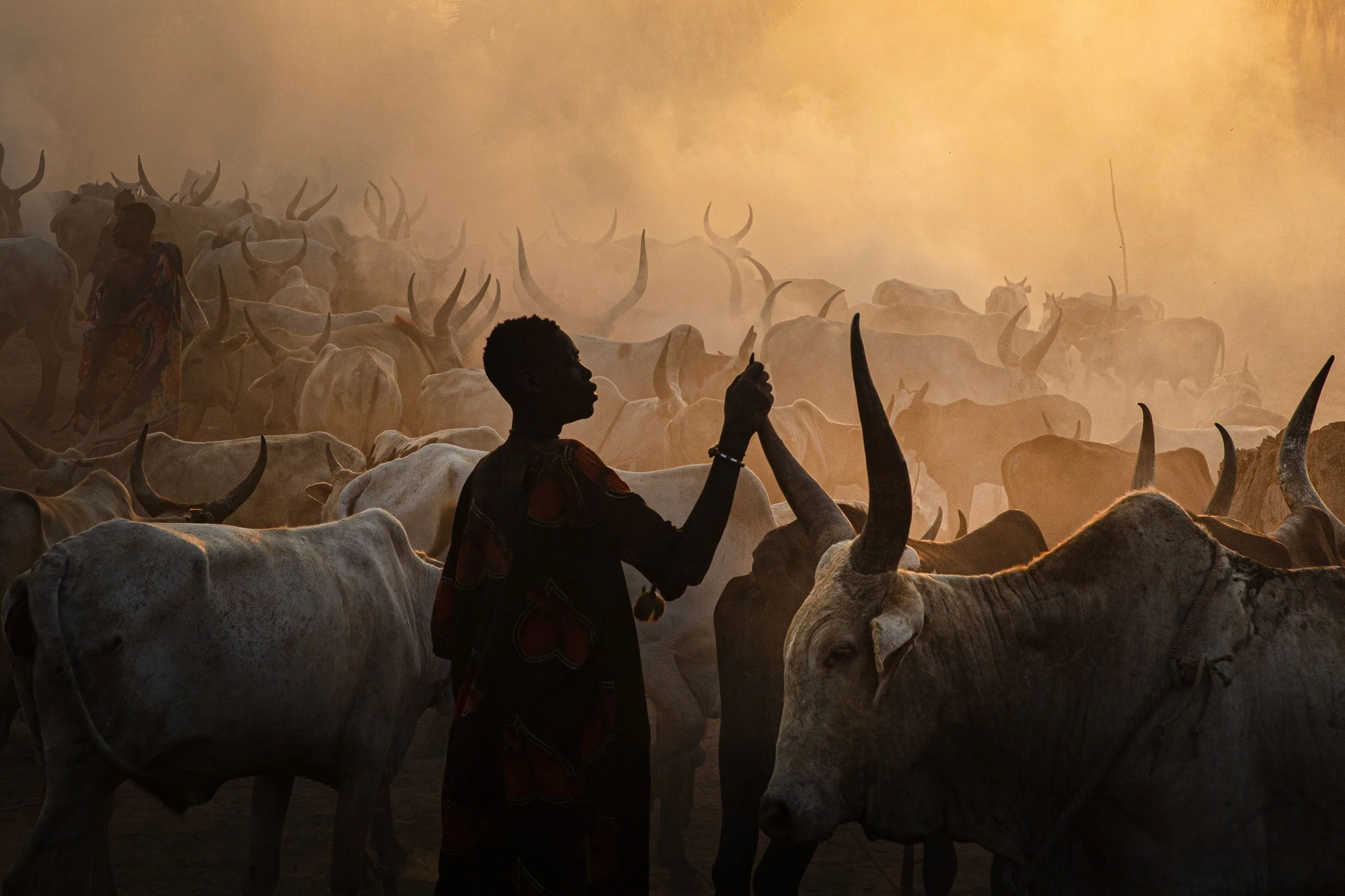
South Sudan
Floodplains & the Sudd
Home to the Sudd, one of the largest freshwater wetlands in the world. It stores carbon, shapes rainfall across East Africa and sustains some of the largest livestock herds on the continent.
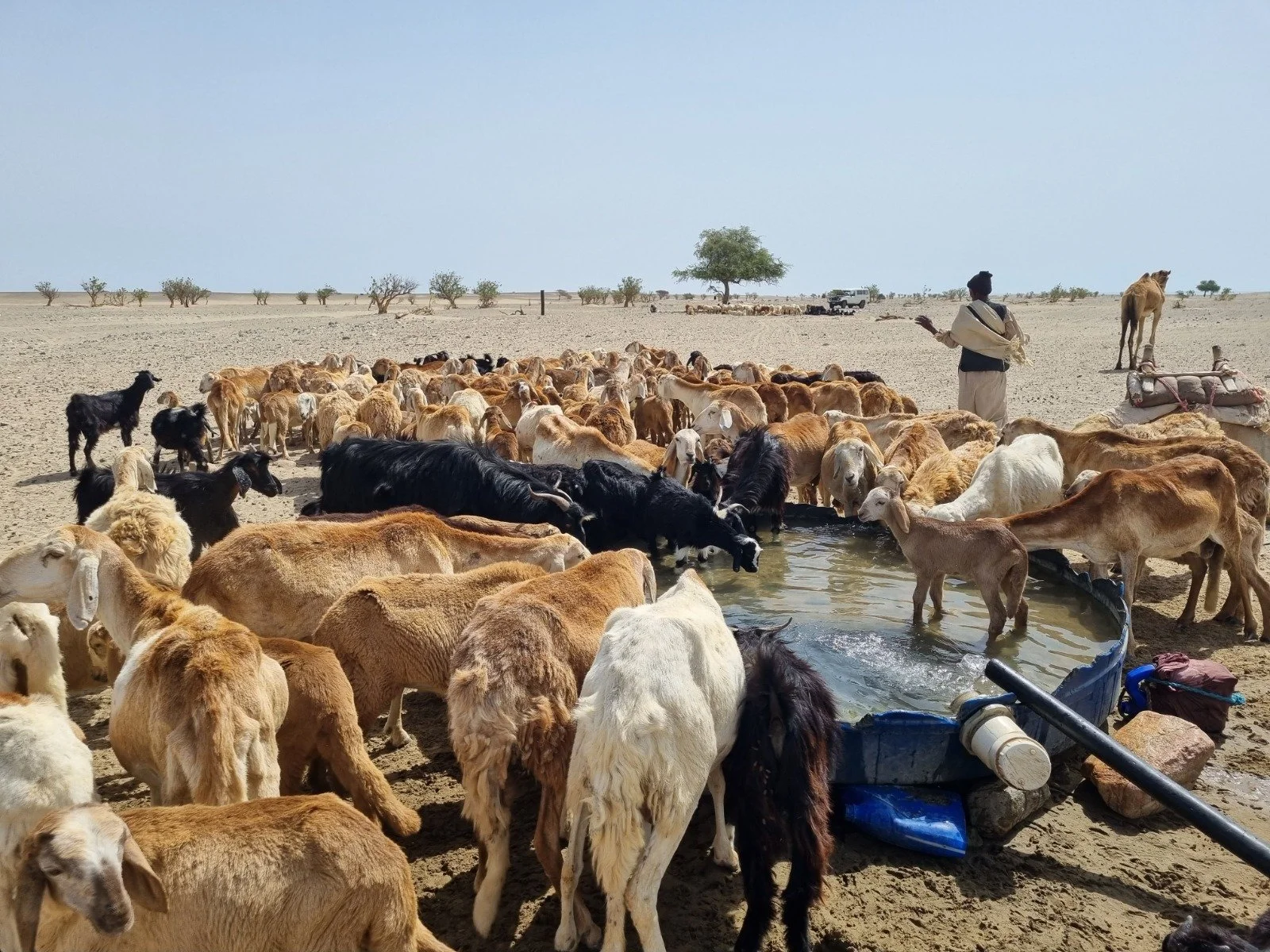
Sudan
Where the White Nile meets the Blue
The largest share of the programme. In the Halba region of White Nile State, 91% of tree cover and a sixth of natural pasture were lost between 1973 and 2014.
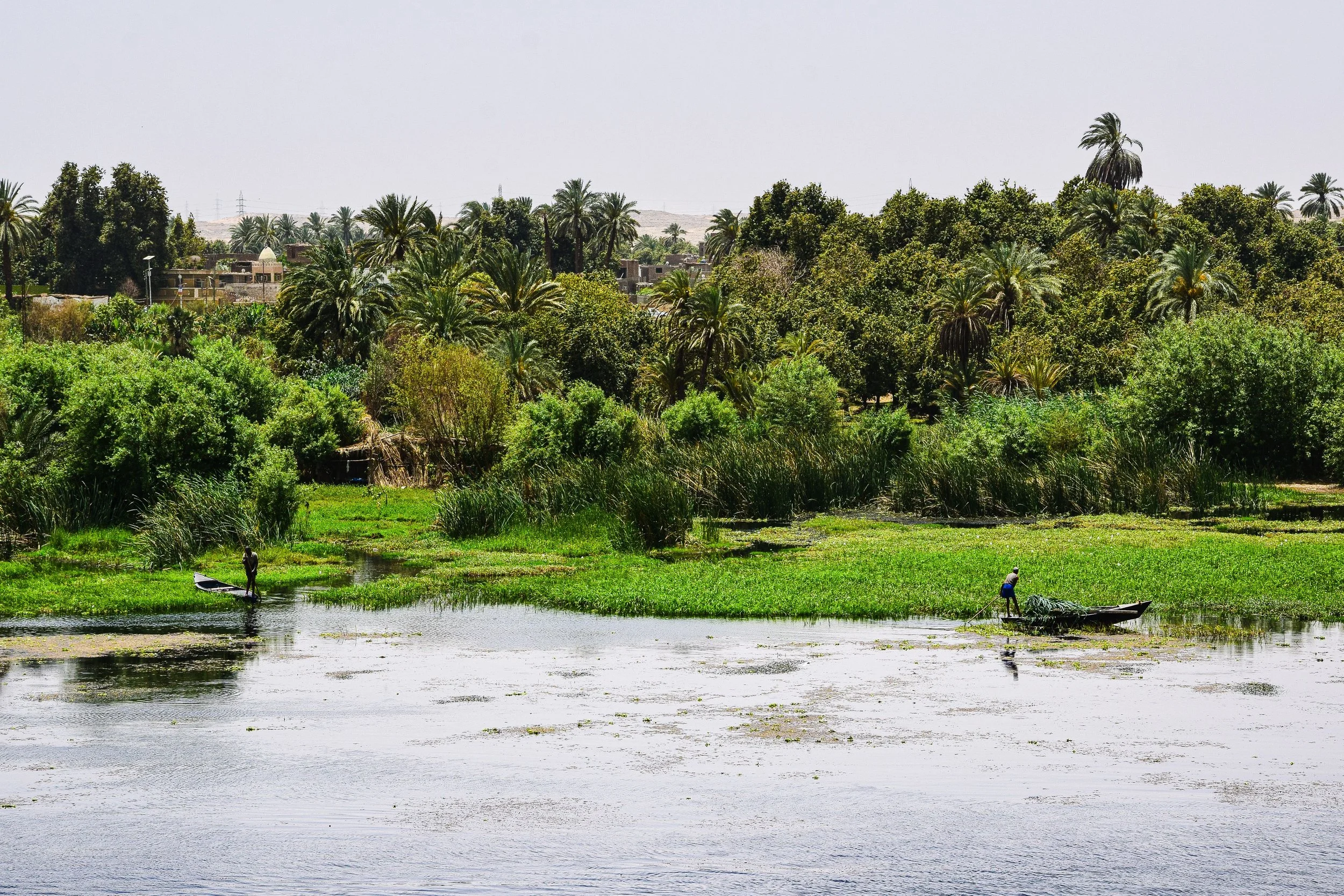
Egypt
Downstream & delta
Where the consequences of upstream degradation arrive. Egypt depends on the Nile for almost all of its fresh water.
Rangelands
The Nile River basin, showing its 11 countries, capital cities, major lakes, dams and protected areas. Source: Allan et al. (2019), Navigating the complexities of coordinated conservation along the river Nile, Science Advances 5(4), eaau7668. Licensed under CC BY-NC 4.0.
Rangelands play a critical role in the Nile Basin, forming part of the wider watershed through which rainfall is captured, stored, cycled and released.
Maintaining ground cover, living root systems and soil structure can improve infiltration and water retention, while vegetation-mediated evapotranspiration contributes to evaporative cooling, and atmospheric moisture cycling and cloud seeding. These processes connect rangelands with riparian zones, wetlands, tributaries and waterways, influencing the movement, storage and availability of water across the wider landscape.
The condition of soils, vegetation and root systems influences whether water infiltrates into the landscape or moves rapidly across its surface as runoff, carrying soil and sediment into streams and rivers. Healthy, well-covered landscapes can slow the movement of water, increase infiltration and soil-water storage, support groundwater recharge where conditions allow, and reduce runoff, erosion and sediment loss.
Importantly, vegetation also connects these landscapes to the atmospheric water cycle. Through transpiration, plants draw water from the soil and release it into the atmosphere, contributing to evapotranspiration, balance between plant transpiration and evaporation from exposed soils influences how water is used and cycled across the landscape, with potential implications for atmospheric moisture recycling. Restoring ecological function across rangelands and connected production landscapes can therefore strengthen how water is absorbed, retained and cycled through soils, vegetation, waterways and the atmosphere. In this sense, restoration in the Nile Basin is not only about managing the river itself, but about restoring the landscapes and ecological processes that underpin its functioning.
Restoring rangelands and water cycles upstream directly reinforces resilience, productivity, and stability downstream, while downstream interventions amplify these benefits by creating positive effects that build-up upstream.
Regenerative Agriculture
Syntropic Agroforestry
Syntropic agroforestry is a way of farming that copies how a natural forest grows back. Developed by the Swiss-born farmer Ernst Götsch on degraded land in Brazil, it plants trees, shrubs, fodder crops and food crops together in dense, layered systems. Fast-growing species shelter and feed slower ones, and regular pruning returns organic matter to the soil. Each stage of growth prepares the ground for the next, so the system becomes richer and more productive over time instead of wearing the land out.
In the drylands of the Nile Basin, syntropic agroforestry rebuilds soil, helps rain soak in and stay in the ground, and brings shade and life back to bare land. It produces livestock fodder and diverse food for pastoralist and farming families. That gives regenerative grazing a head start where feed is scarce, so the two approaches strengthen each other. It has already been shown to work in arid places with less than 100 mm of rain a year, which makes it a practical tool for restoring some of the region’s hardest-hit landscapes.
Holistic Management
Holistic Management is a planning and decision-making system that helps people involved in livestock farming, agriculture, and other sectors to better manage resources to reap environmental, economic, and social benefits in a regenerative way with a long-term focus on quality of life.
This framework was developed by Zimbabwean ecologist Allan Savoury over more than 60 years and builds upon practices with deep roots in pastoralist and Indigenous land-based knowledge systems across Africa. It provides a whole-system approach for managing land, livestock, people and finances together, and has been used on millions of hectares of rangeland globally.